
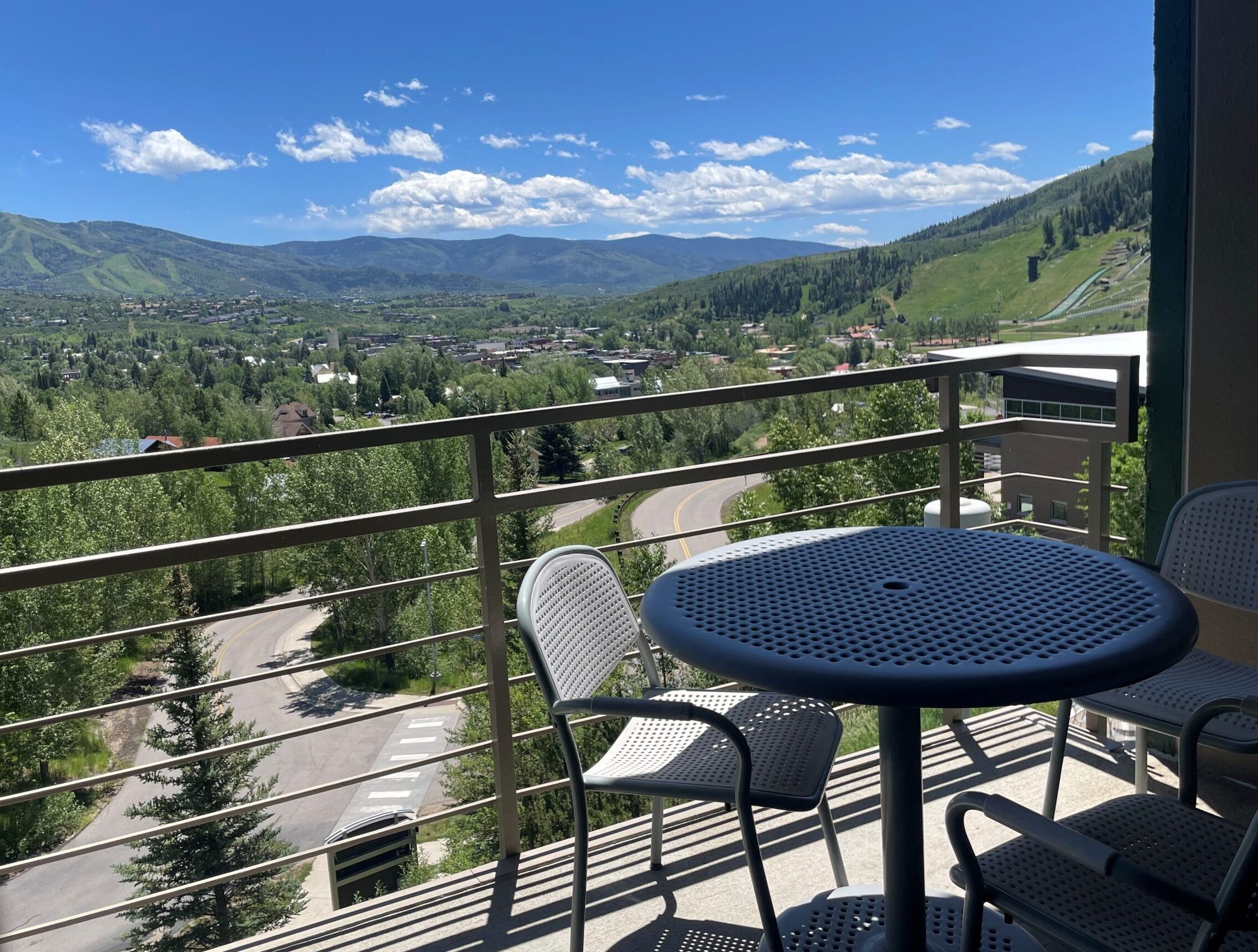
The library sits at the center of the Colorado Mountain College (CMC) Steamboat Springs campus, both literally and figuratively, and this location comes with a view. Amy Bahlenhorst, Research Analyst, and I had the opportunity to pause on the library’s balcony and take it all in on a beautiful June afternoon. The view of Steamboat Springs and surrounding Yampa Valley was just a bonus, however, to the rest of the tour and wonderful conversations we had during our visit to this academic library. We heard how the library supports CMC’s students and faculty. Regardless of whether students need to finish a paper or take a break from studying altogether, they can find something in the library to help.
A Social Space
A theme that shone through our entire library visit was the importance of the physical space for social connections. First, we spoke with Sam Geis, a former student and current CMC Steamboat Springs employee, who described using the library mostly in a social capacity: “The people I’m up here interacting with on a regular basis, they’ve definitely helped me establish a base level of comfort in my social interactions.” Sam’s favorite memories or experiences at the library include “lots of lovely interactions with the staff of the library, just hanging out, doing puzzles, [and] drinking coffee.”
For Students
It was clear through our conversation with Tracey Hughes, Library Director, and Courtney Savage, Library Technician, that staff also value and prioritize the social aspect of students’ library visits. They always want someone available to greet and assist students as they enter the library, and Tracey expressed her appreciation that Courtney is happy to be that person:
Courtney is awesome at being at the desk. . . actually seeing somebody. For a while we had a calendar to make sure that there was somebody at the desk. And we don’t have to do that anymore because you [Courtney] do such a great job at it.
And Courtney clearly thrives in this role as well: “I’m front and center. I love it. I’m moving around. I’m there to help the students,” she explained. They have even set up the front desk to promote collaboration:
I step out from behind the desk a lot. So if a student walks up to that side of the desk and they’re turning their computer, I’ll walk around so we’re looking the same way. That’s why we also have those two monitors so that we can be searching something in the databases and showing them. And then they can also take over with the keyboard and the mouse and do it themselves.
~Tracey Hughes, Library Director
It’s small, thoughtful touches like this that bring the library to life by allowing staff to organically connect with students, get to know people’s names, and build relationships. When we asked what would be most missed if this library didn’t exist, Sam responded:
I’d definitely miss the people here. . . I’d miss the intellectual conversations I have up here with people, some of the projects we do or the events we do, open conversations with classes or professors. I’d miss the view. It’s a beautiful view.
For Faculty
To build this culture of collaboration, the library staff also grows relationships with college faculty. Tracey explained:
We do a little coffee co-op. . . people [faculty] will bring coffee, beans or milk and come up and get a cup of coffee, and so we have a lot of really great informal collaborations and projects and things that come out of that. So that’s really important for our library and how we fit in the fabric of our campus, that we are a physical place, that we are accessible and approachable and forward reaching in our partnerships and what we do.
When library staff connect with both students and faculty it in turn creates a space where students and faculty can connect outside of the classroom. “A lot of our full-time faculty have started doing their office hours in here,” Tracey shared. “So they’re available to their own students, plus any other students who need help with that subject.” When asked about their favorite experiences in their time working at the library, both Tracey and Courtney had a hard time coming up with just one:
Faculty get to connect with students on a different level when they’re tutoring, and they’re building a little community there, and I love watching that. And then we get to interact with the faculty, so we’re building our little community with the students. Every day is a great day.
~Courtney Savage, Library Technician
For Community Partners
Although their primary focus is always students and faculty, Tracey and Courtney know that their library and campus do not exist in a silo. Connections with the community and real-world experiences are going to set their students up for success. When we asked how they would like to see their library grow and evolve moving forward, Tracey’s and Courtney’s responses revolved around building more opportunities for connections with the community. “Program and community connections. . . bringing more people here, us going out more,” Tracey said. “Really trying to strengthen those networks to facilitate better outcomes for our students and for our college and for our community.”
Something for Everyone
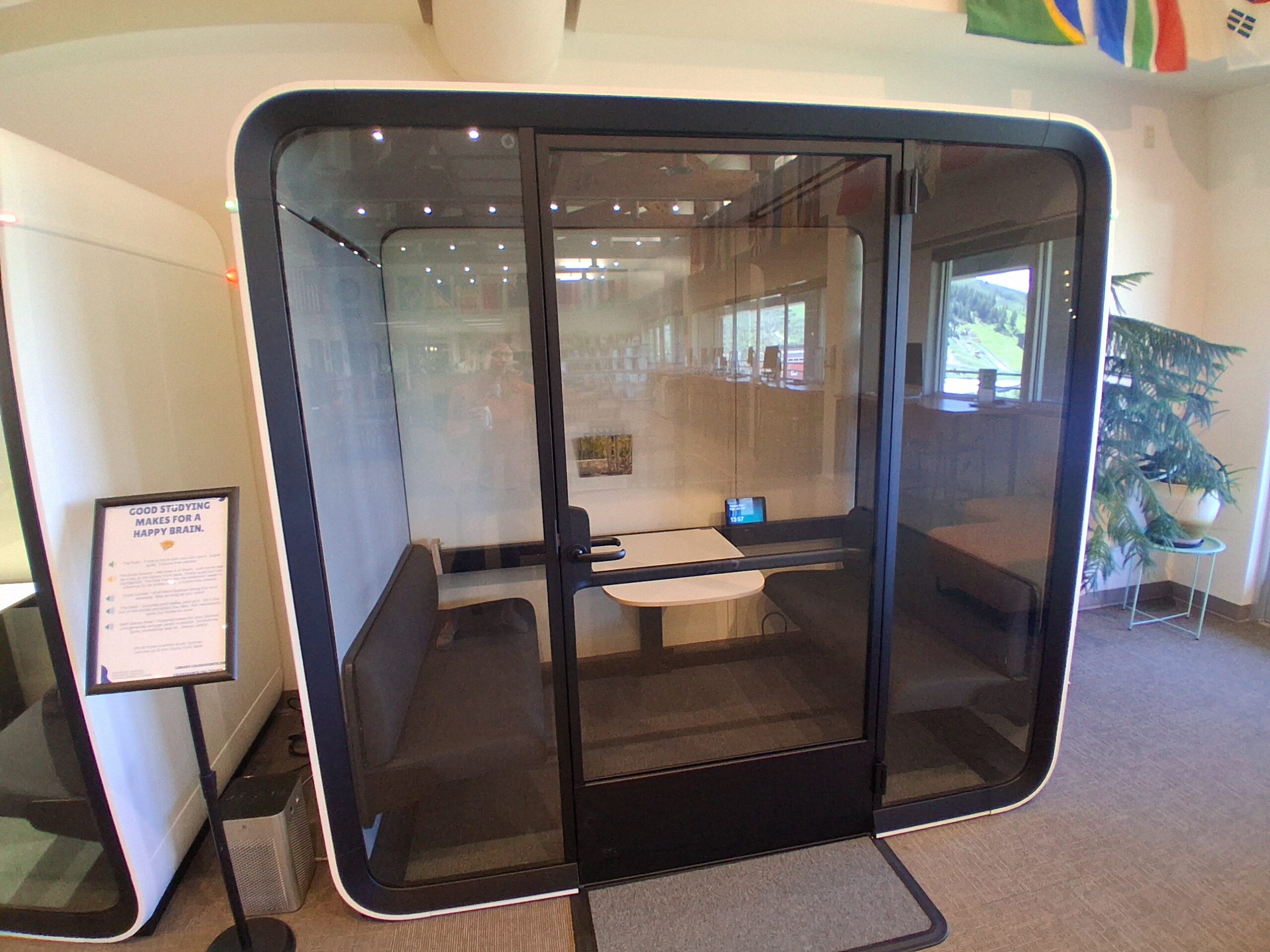
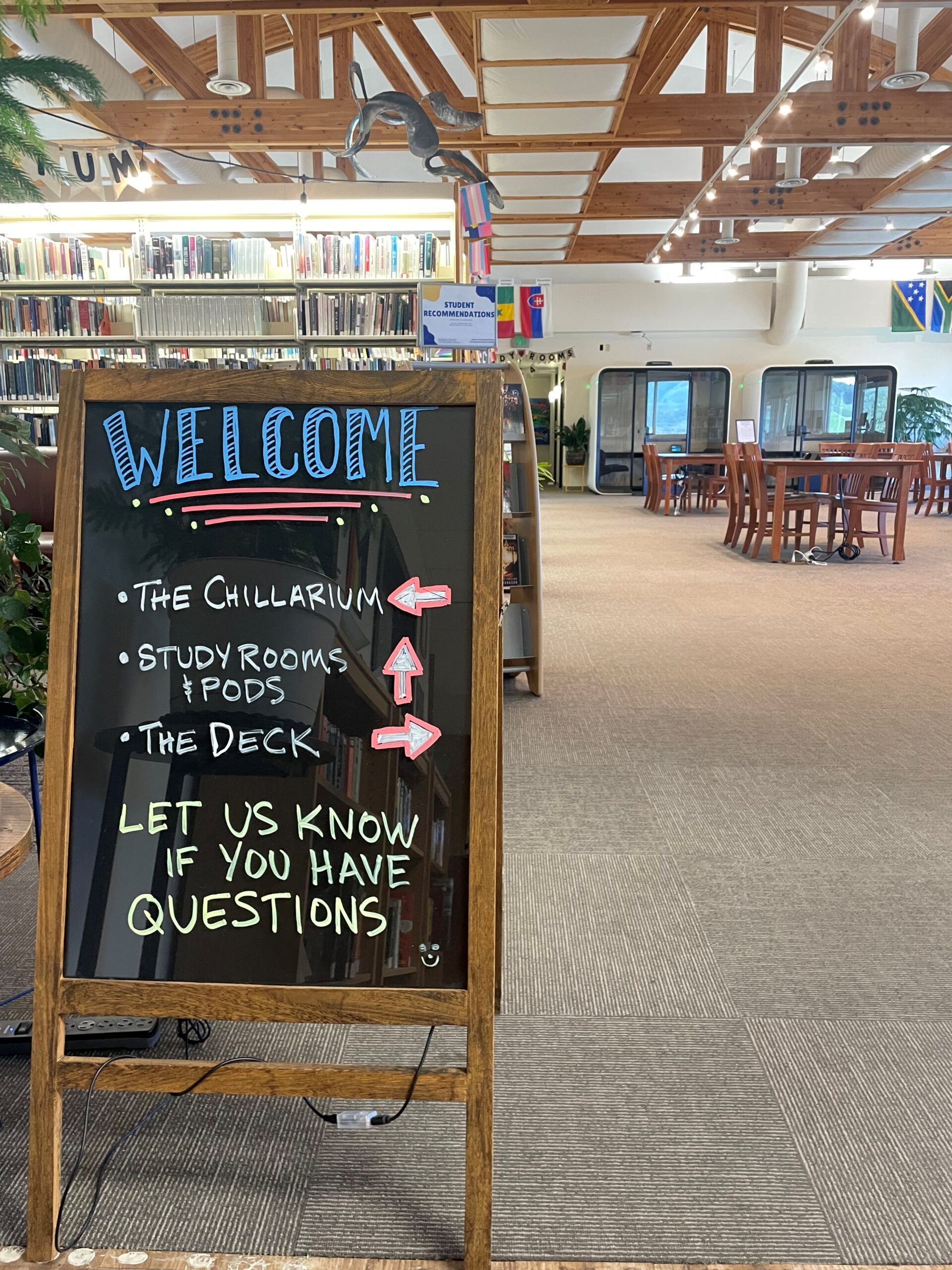
Providing a social space for connecting and collaborating is certainly a strength of the library, but it’s not lost on Tracey or Courtney that students’ needs vary greatly. Students coming to the library for a quiet workspace to themselves will find multiple study rooms and soundproof, climate-controlled pods to meet their needs. “There is something for everybody here. Even if it’s just to go sit in one of our pods,” Tracey pointed out.
In fact, students come to the library for so many different reasons that when I asked Courtney what typical reference questions she responds to, the variety of questions is what stood out the most. “It’s everything,” said Courtney. She brought up APA formatting, citations, and research questions, but it clearly isn’t easy to predict what a student might ask for. “Every day is a little different in terms of student needs and faculty needs,” Courtney explained. “One of the beauties of the job is that you don’t know. You don’t know what’s coming,” Tracey agreed.
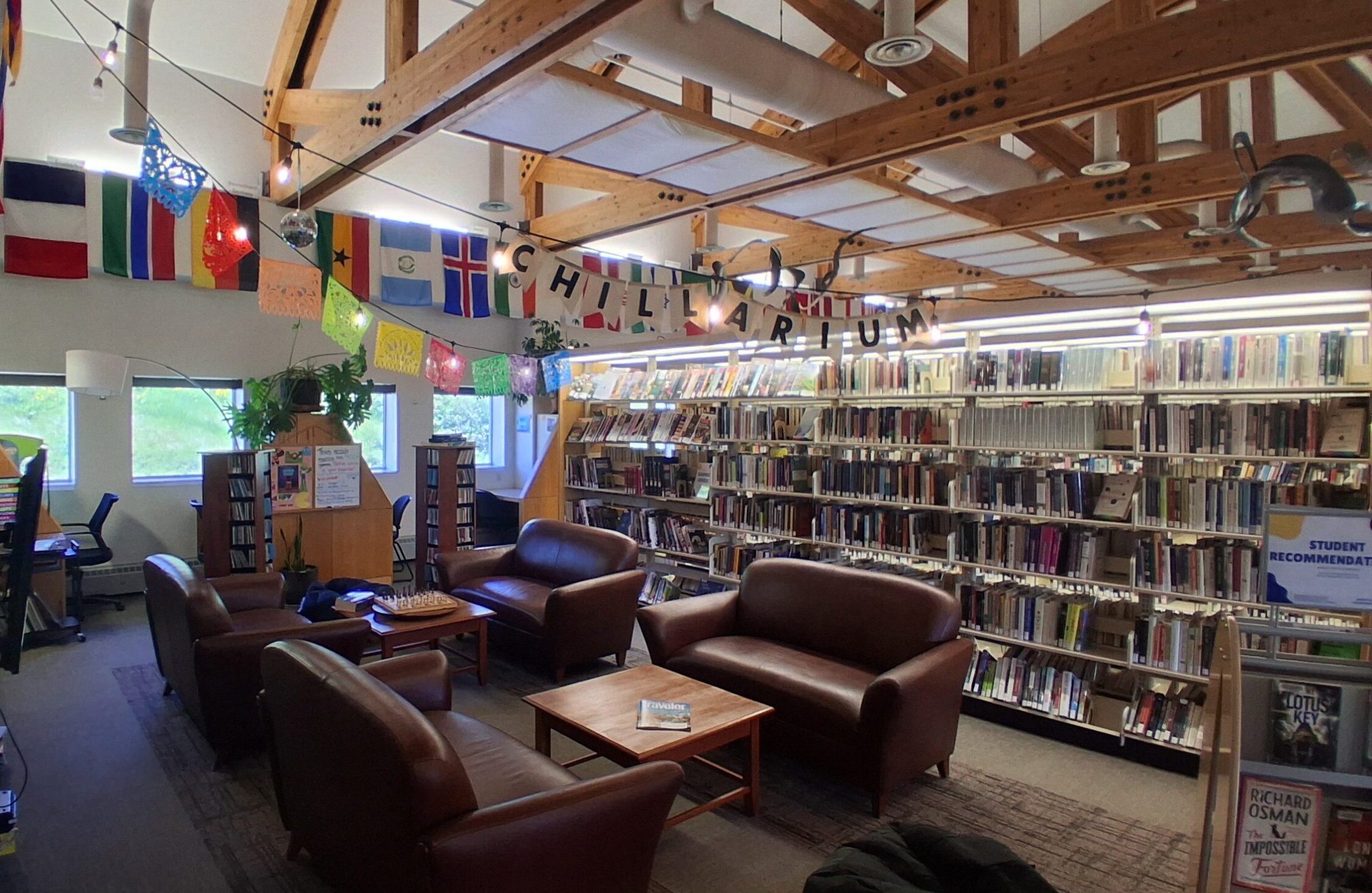
The library staff makes sure that students not only feel welcome in their interactions at the library, but that the space itself is also welcoming and representative of all. Flags hung around the library depict every country that CMC students are from, and LGBTQIA+ flags also decorate the stacks. Curating a diverse collection is also essential. During our tour, Tracey described how she loves to reorganize and rearrange. One of her most recent projects was to move the Spanish language and English as a second language collections into a more visible area for people to find. “When I look at the stacks, I see the whole world,” Tracey shared.
All of the staff’s efforts to ensure people feel welcome at the library have paid off. Their monthly door count lands around 4,000 visits. Even though the June afternoon we visited was quiet with most students enjoying the summer off, Sam explained how that’s not usually the case: “It’s always crazy busy during finals. Last minute studying, all these computers are usually filled up, and people working on projects, printers going like crazy.”
“Good Energy, Healing Vibes”
This is how Sam described CMC’s Steamboat Springs campus library, and throughout our visit we saw several ways it creates a positive environment for students. The library staff is at the center of it all.
When we asked Tracey and Courtney which library services they see students benefitting from the most, Courtney responded:
Knowing that they have a safe space. They’re part of a community here. And I think that’s really vital in their sense of place and their student experience to know that the library is a space that they can go to and feel like they’re at home.
Sometimes it’s the little things that help students feel at home, such as having a puzzle at the front desk for anyone to work on. “People will tell us, ‘I haven’t done a puzzle since I used to do puzzles with my grandparents. And it is a nice breather,’” Tracey said. Courtney also described the puzzle as “a really easy way for students to feel calmer and more open to having a conversation about life and what they want to do beyond college.”
Year round, students can enjoy the library’s plants, natural lighting, comfy chairs, and games. There are even blankets available for when it starts to cool down on the balcony. Then, during finals week, therapy dogs, massage chairs, and snacks are also brought in! “We’re their cheerleaders for sure,” Courtney said. “The whole campus is. This is a very small community, so we all know the students pretty well intimately. And that’s the nice thing about being at a small college,” she continued. There’s even a table of goodies such as stickers, chapstick, and crafts for students to enjoy.
All of these little things come together to build a supportive environment students can turn to when they’re coping with stress or need answers. “We connect people with resources. And that might be an academic resource. It might be a community resource or a question. It could be just giving them a little chance to take a breath,” shared Tracey. And students aren’t the only ones that benefit from the library’s good vibes. “It’s a good space for people to be, all of us. People who work here, people who come here, community members who come here, it is a nice nurturing place,” said Courtney.
Slow Food for Thought
The library falls into a unique place on campus between student services and academic affairs. Tracey explained that, while they are officially considered part of academic affairs, the library functions in both capacities. She also described the perspective with which she approaches her role as Library Director:
I really value the slow food concept and slowing down and being more mindful. . . giving us a chance to not be so stressed. And we all, I think, are pretty maxed out in lots of different ways and our students – everybody has got lots of jobs and lots of other things going on. And the myth of the student just taking 15 credits and hanging out and doing nothing is pretty much a thing of the past. So our students are very busy and very dedicated. And so whatever we can do to help them succeed academically means also helping them succeed and [being] supportive in lots of different ways as well.
Approaching a reference interview or tutoring session with this mindset can give students the space they need to engage thoughtfully with their work. This can be incredibly important, particularly at the start of a project:
In the academic library, it’s all about the reference interview. And the question that they [students] come up with is typically not the question that they actually are trying to answer. So we help people refine their research question, identify a topic.
~Tracey Hughes, Library Director
After landing on a research question, slowing down is also essential when it comes to checking sources, especially in this age of artificial intelligence. The librarians give pointers on “how to use the various databases. . . and navigate for relevant information through the irrelevant information,” shared Sam, the library patron we chatted with.
The library’s designated Tutoring Coordinator, Libby Foster, helps students access tutoring opportunities in almost any area of study in-person or online. Part of making tutoring more accessible is breaking down the stigma around tutoring, which Courtney shared is a top priority of the library staff: “A lot of the students are proactive, and they just want to get ahead. . . I think Libby and Tracey have created this environment where it’s part of the student experience to have tutoring.”
The library also facilitates programs that encourage people to slow down and listen to one another, such as Living Room Conversations, which create a space for people to engage in semi-guided discussions on challenging topics. Tracey told us that she has taken the facilitation class to lead this dialogue series, has hosted a few already, and will continue to grow the program because, “we all need much more opportunity to learn to talk to each other.” Another of Tracey’s favorite programs is Intercambio, a language exchange night, that she co-hosts with the English as a second language faculty. The program brings in a crowd of 80 or so attendees who partake in activities encouraging them to interact, communicate, and connect with different language speakers. “It’s really, really cool and people bring food, so we have a big potluck. It’s really a great event. I love it,” said Tracey.
An Academic Library Lens
Everything, from the quality conversations to the cozy blankets, that we saw during our visit helps the library succeed in its mission. When we asked what the responsibility of this library to its patrons is, Tracey and Courtney put it simply: “To facilitate their [students] success, to be a part of their experience in a positive way,” responded Tracey. “Be part of their journey,” added Courtney. “Be an approachable space for everyone.”
In response to this same question, Sam stated: “The role is to provide an open space where you can access materials, discuss materials, and have the help of some talented tutors, access to your fellow students. It’s a place of education – open thinking.” And it is clear that the library staff is at the core of making this all happen. “We’ve got the best people ever behind the desk over there. They’re all wonderful. Love them to death. It’s the reason I come up here,” Sam concluded.
Thank you for reading this chapter of Colorful Colorado Libraries: Stories from our Centennial State. A huge thank you goes to Tracey Hughes, Library Director, and Carrie Click, Public Information Manager for Colorado Mountain College, for making this post possible. To join the Library Research Service’s Colorado Public Library Data Users Group (DUG) mailing list and receive posts via email, please complete this form.
If you would like your library to be featured in a post please reach out to Sara Wicen at wicen_s@cde.state.co.us. Thank you!